Monday, November 7, 2011

The Stars


What is a star?
Stars are big balls of hot gas that changes its luminosity over a period of time. From Earth they are seen very small but actually they are huge. Stars are born in a giant cloud of dust and gas, they also change...sometimes they might shrink due to gravity , lower their luminosity and even explote. 
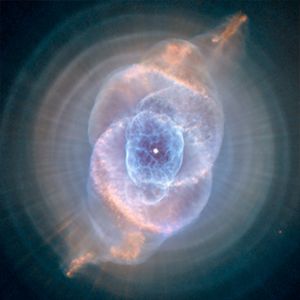

Types of Stars 
There are four type of starts which are White Dwarfs, Main Sequence                                                           Giants and Super Giants. 


White Dwarfs are stars that already died. These stars are white and dim, meaning they don't have as much magnitude as other stars. They are small stars, their temperature is from 6,000 to 20,000 Kelvin. 

Main Sequence stars are blue stars. The majority of stars in the galaxy are main sequence stars including the Sun. These stars are from 11,000 to 25,000 Kelvin and the average luminosity is 20,000 except the Sun is 1. 


Giant stars are red stars. Their temperature is from 3,000 to 7,000 Kelvin. Their luminosity is greater than 100 to 10,000.  


Super Giants Stars are also red stars. They are huge stars of course. Their temperature is less than 10,000. Their magnitude is greater than 10,000. 


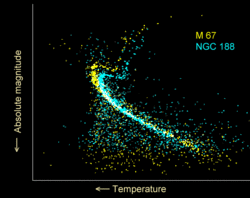
H-R Diagram There are varieties of stars in space, and each of them are classified into many categories. For example, the temperature inside the star determines the color of a star. Red stars' temperature are approximately 3,500 Kelvin.


    This is a diagram that the scientists use in order to classify the stars. 


    Nuclear Fusion 
     Nuclear fusion is when the star is burning fuel. 


    The Life Cycle of a Star

    Wednesday, October 19, 2011

    Mercury

    mercury1.gif (340×337)


    • Mercury is the 1st planet from the sun.
    • The distance from the Sun is 77.3 Million km.
    • The amount of Mass that Mercury has is 33,022 x 10^23 kg.
    • Its diameter is 4,880 km.
    • Mercury takes 59 days to do its rotation.
    • It takes Mercury 88 days to go around the Sun and complete its revolution.
    • Mercury has no moons and is a Terrestrial planet, meaning is made by rocks. 
    Planet Description
    • Mercury has no true atmosphere.
    • It is the closest planet to the Sun.
    • This planet is covered in craters, these are caused by the meteorites and asteroids that hit the planet.
    • The first visit to Mercury was made by the Mariner 10 Spacecraft, in 1974.
    • If you were to stand on Mercury, the Sun would appear two and a half times bigger than what it looks like from Earth. 
    Interesting Facts 
    • Mercury was named after a Roman god.
    • Is the second smallest planet.
    • Mercury has the largest eccentricity, it has 0.206. 

    Friday, October 7, 2011

    Hurricane Irene


              Questions

    • What time of the year do hurricanes occur? Why do they only happen during that time? Hurricanes mostly occur during the summer and where there is lots of warm water. They happen only during this time because when a hurricane contacts warm water, it gathers more energy.
    • How can the timing of the tides effect the devastation of a hurricane? The high tides during a hurricane effect a lot more an area because the rivers, streams, lakes and oceans overflow faster.
    • If an area is fully saturated, will a hurricane have more or less impact on an area? A hurricane will have more impact because since the ground is fully saturated, the water can start taking trees with itself and block the streets.
    • How does groundwater saturation affect rivers and streams? The ground water saturation affects the rivers and streets in the way that it adds more water and the rivers get overflow.  
             Reflection 
    • What is something that you liked about this mini-project? I liked how I learned about hurricanes, about how they form, what causes a hurricanes and the effects.
    • What was difficult for you in this project? I did not have difficulties in this project at all. 
    • What would you change about your work on this project? I think that I would have been much more creative with my worksheets. 
    • How did this project help you learn about Hurricane Irene? This project helped me a lot because before I didn't even know what caused a hurricane and so now I realize that Hurricanes don't happen from one day to another.